Craft as habitats and interfaces
The reported craft become easier to integrate once a vehicle is allowed to serve purposes beyond transportation.
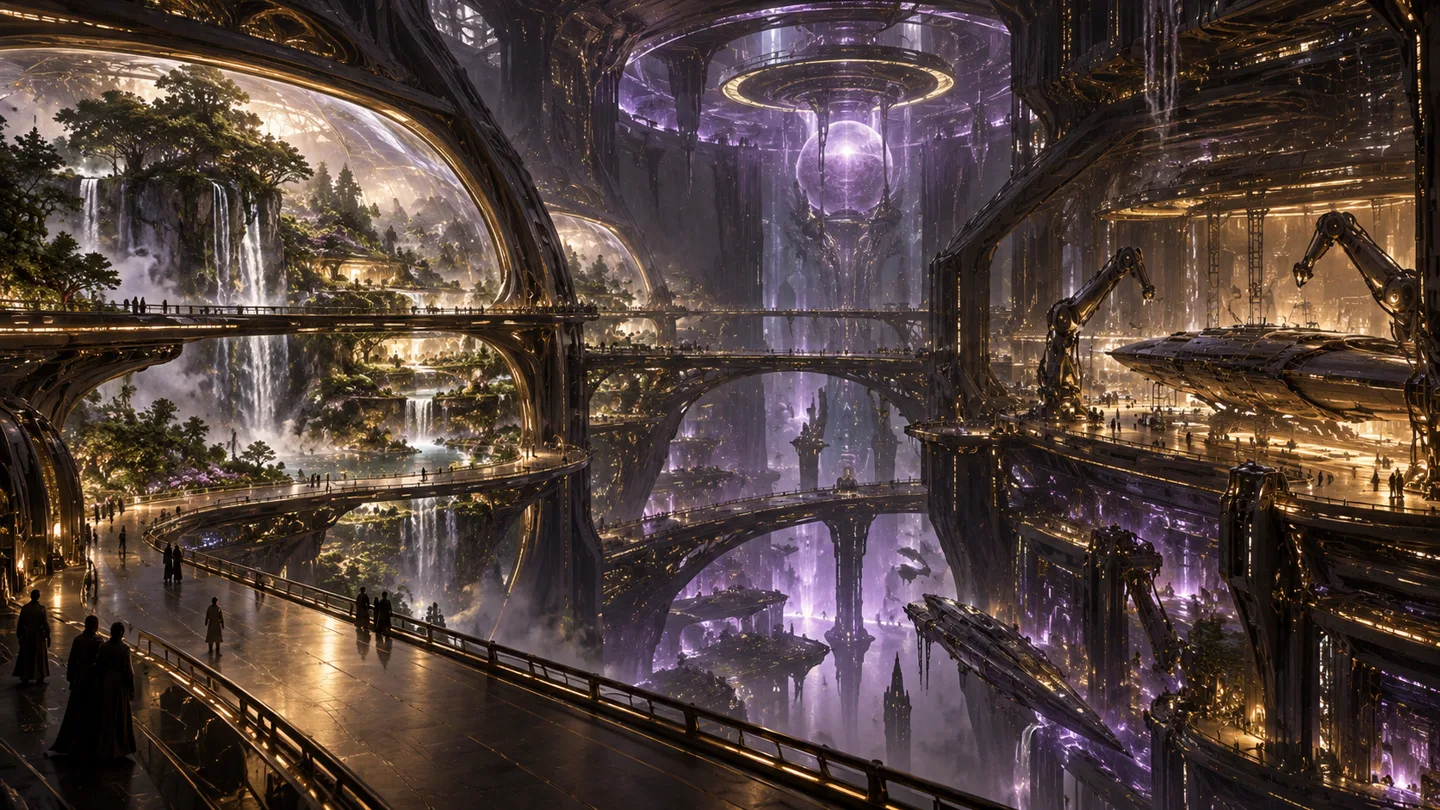
A craft as a working environment
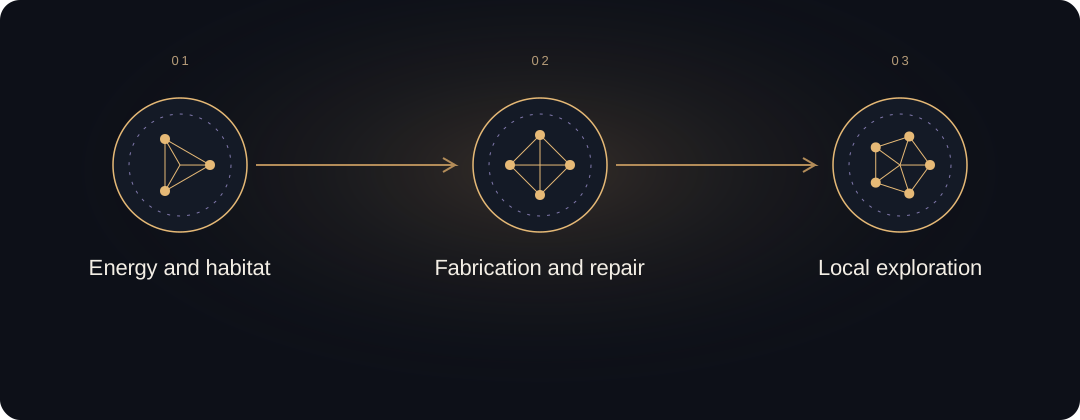
For a source intelligence adapted to radically different conditions, a craft could be a portable habitat. For a distributed civilization, it could be a local manufacturing and communications station. For an embodied agent, it could be a repair system, energy source, or boundary between incompatible environments.
The supplied chats discuss an alleged craft described as larger inside than outside, with an unusual interior and no familiar controls. The attribution runs through Stratton’s account of a defense-industry source; the first pass has not independently inspected or measured such a craft. C11R15
Within the speculative model, that description opens several possibilities:
- Unfamiliar geometry: the interior and exterior are related in a way ordinary intuition does not capture.
- Remote access: crossing an apparent entrance connects to an environment located elsewhere.
- Mediated perception: occupants experience an interior whose perceived scale differs from its physical dimensions.
- Unusual design without altered spacetime: the report reflects a genuinely strange but less exotic architecture or perceptual effect.
Only the first two require an extension into spacetime engineering. They should remain optional. Biological avatars and selective contact do not logically require portals or a physically enlarged interior.
The absence of visible controls would fit an interface intended for direct neural coupling, environmental sensing, or autonomous operation. A person looking for seats, levers, and a cockpit might be applying the design language of human transport to something organized around another kind of user.
The alleged recovery of hardware is therefore compatible with limited understanding. Possession of a device is not equivalent to possession of its operating environment, network permissions, fabrication system, or conceptual framework. An isolated component could remain inscrutable even when its materials are available.
That is the useful interpretation of the twelve-craft story in this theory: the possibility of physical access without operational access. The number twelve remains an attributed claim rather than a premise required by the model. C09