Biological avatars and local manufacture
The biological-avatar proposal is the strongest bridge between the primordial-origin idea and reports of recognizable occupants.

Building a body for a place
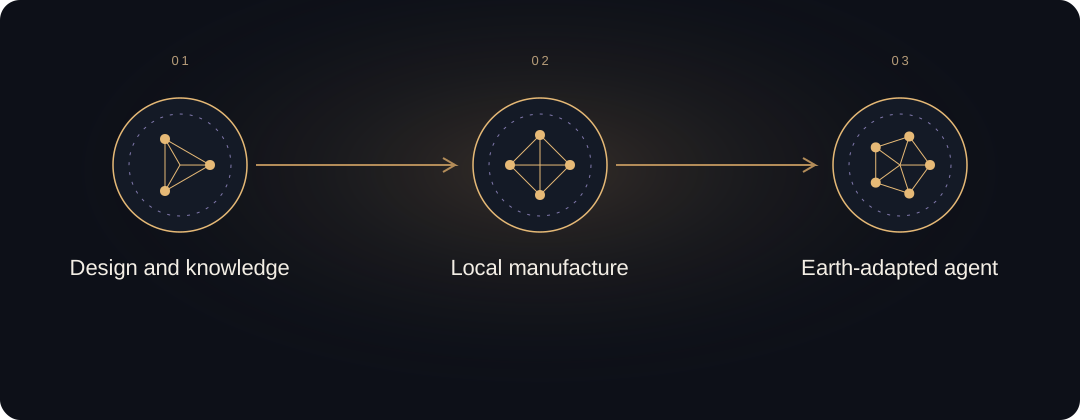
The document asks why beings with radically different origins would breathe Earth’s atmosphere and resemble terrestrial organisms. It proposes that these bodies are manufactured for the environment. Near 26:33–27:18 in the first NewsNation compilation, Loeb independently discusses synthetic biology and local production as a possible explanation for Earth-compatible biological pilots, conditional on the reports. D01 (paragraphs 9, 22, 83; V01)
The theory does not need the exact oxygen mixture of an alien homeworld to match Earth’s. Compatibility could arise through adaptation, protective technology, or manufacture. The speculative argument is functional: a local body is a useful way to interact with a local environment.
Such a body could be designed around:
- Atmospheric pressure and gas exchange.
- Local gravity and terrain.
- Environmental temperature and radiation.
- Terrestrial microorganisms and chemistry.
- Communication with human senses and expectations.
- A particular mission duration and need for maintenance.
“Just in time” need not mean appearing instantly from nothing. It can mean being assembled or matured when required, using prepared biological components or an established production process. This avoids making an unnecessary assumption about instantaneous growth.
The intelligence might reuse designs from other environments, modify a terrestrial organism, or build a hybrid of biological and artificial components. A human-like shape could be selected because it can use the same spaces, gestures, and tools as humans. A less human shape could reflect a specialized task or an inherited template.
Captivity and the refusal-to-eat account
The avatar chat discusses a reported account of survivors refusing food and dying. Within the theory, several mechanisms could produce such an outcome: dependence on specialized nutrients, loss of external support, a limited operating lifespan, failure of maintenance, or deliberate termination of a mission. C05
None requires the source intelligence to die with the body. Nor does the account itself distinguish those possibilities from injury, stress, incompatible food, or an ordinary organism’s refusal to cooperate.
The most interesting conceptual consequence is that a capture might secure the interface while leaving the identity and knowledge behind it inaccessible. The captured being might not possess the answers investigators want. It might sincerely report a limited history or an invented one because that is the only history available to it.
The theory should leave the agent’s moral status open. Manufactured origin would not, by itself, make mistreatment inconsequential or establish that the being lacks consciousness.